

-p-500-720x400.jpg)
The packaging and labelling industry is about to undergo a major shift.
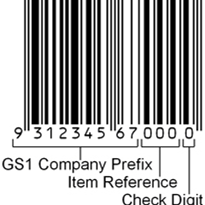
By 2027, the GS1 Sunrise 2027 initiative will require businesses around the globe to transition from traditional 1D barcodes (like EAN/UPC) to 2D barcodes, such as QR codes and GS1 Digital Link-enabled formats, especially at retail point-of-sale.
This is more than just a barcode upgrade, it’s a shift toward smarter, more connected packaging.
And if your business uses label applicators, coding equipment, or packaging automation, now is the time to plan. This blog gives you the clear, practical action plan you need to get ready, and keep your packaging line compliant, efficient, and competitive.
What is GS1 Sunrise 2027?
GS1 Sunrise 2027 is a global initiative to make 2D barcodes the new standard for product identification and scanning at retail checkout.
These barcodes can store:
- Global Trade Item Number (GTIN)
- Batch/lot numbers and expiry dates
- Links to digital content via GS1 Digital Link
- And other application-specific data
This change is being driven by the need for:
- Greater supply chain transparency
- Real-time traceability
- Consumer engagement via smart packaging
- Enhanced recall and regulatory compliance — especially in industries like food, pharma, and healthcare
What This Means for Labelling & Coding Equipment
If your business applies labels or uses inkjet, thermal transfer, or laser coding systems, it’s essential to ask:
- Is your current equipment capable of printing or applying 2D barcodes like QR codes or DataMatrix?
- Can your printer or label applicator handle variable data such as serial numbers or expiry dates?
- Do your systems integrate with ERP or packaging line controls to dynamically update barcode content?
Many older systems are limited to fixed 1D formats. Fortunately, modern print-and-apply labellers, inline coders, and variable data printing systems are now equipped to handle these new requirements.
GS1 Sunrise 2027 Timeline: What to Do Now, Next, and Later
Here’s how to approach the transition in manageable phases.
Now (2024–2025): Awareness & Planning
- Educate internal teams (operations, marketing, IT).
- Audit current barcode systems and label formats.
- Assess POS scanning and compliance with key retail partners.
- Begin conversations with your equipment supplier to evaluate upgrade needs.
- Identify pilot products for 2D trial runs.
Start by checking if your current label applicator or coder supports 2D symbologies or GS1 Digital Link encoding.
Next (2025–2026): Testing & Transition
- Test 2D code printing or label application on selected SKUs.
- Validate POS and scanner compatibility.
- Ensure ERP/WMS systems can generate and pass batch, expiry, and serial data.
- Align packaging and artwork with data-rich barcode positioning.
- Train operational teams on barcode quality verification.
Later (2026–2027): Full Rollout & Compliance
- Expand 2D barcode use across all applicable SKUs.
- Retire outdated equipment or software that doesn't meet GS1 standards.
- Roll out training across production and quality teams.
- Launch consumer-facing marketing using GS1 Digital Links to build trust and engagement.
- Conduct regular barcode grading/verification to maintain quality.
GS1 Sunrise 2027 Readiness Checklist
Here’s your compliance prep list:
- Do all your products have a defined barcode upgrade plan?
- Is your labelling or coding equipment 2D-capable and GS1-compliant?
- Can your systems apply or print variable data on the line?
- Have you validated barcode positioning and scannability with retailers?
- Are your teams trained to manage 2D barcode changes and system updates?
- Have you selected a trusted equipment partner for upgrades or system checks?
Who in Your Business Should Be Involved?
This isn’t just a packaging decision — it’s a whole-business transition. The departments below should collaborate:
Department
- Operations & Packaging
- IT & Automation
- Marketing & Product
- Quality & Regulatory
- Procurement & Supply
- Retail Partners & Sales
Role in GS1 Transition
- Evaluate and upgrade applicators and coders
- Integrate ERP with variable data workflows
- Use GS1 Digital Link for consumer engagement
- Ensure data accuracy and compliance
- Engage with suppliers for barcode readiness
- Align barcode format and readability expectations
Final Thoughts: Make GS1 Sunrise 2027 a Competitive Advantage
The businesses who act early will be the ones best positioned to:
- Avoid last-minute disruption
- Streamline compliance
- Launch connected packaging experiences
- Enable faster recalls and real-time product data
- Strengthen retail partner relationships
Whether you need a new labeller, a GS1-ready coding printer, or advice on integrating 2D barcode workflows, we’re here to help.
Ready to Upgrade for GS1 Sunrise 2027?
At Tronics we work with manufacturers and brand owners across Australia and New Zealand to prepare for GS1 Sunrise 2027, offering 2D-capable labelling and coding systems, custom barcode printing solutions and on-site training.


-160x160-state_article-rel-cat.png)







-160x160-state_article-rel-cat.png)