
Key takeaways
- What they are: A diagnostic scan tool plugs into a vehicle's OBD port and talks to its control modules, reading fault codes and live data so a technician can find and confirm a fault. Tools range from simple code readers to OE-level workshop tablets.
- What they cost: Diagnostic scan tools on IndustrySearch list from around $100 for a basic reader to over $8,000 for a flagship workshop platform, with professional bi-directional units clustering around $1,500 to $4,800.
- Where they fit: Independent workshops, mobile mechanics, dealers, and fleet operators servicing a modern vehicle fleet full of electronic modules. A basic reader suits DIY, not a workshop.
- Why now: Cars are rolling computers, skilled mechanics are in national shortage, and the tool that diagnoses fastest is what keeps work in the bay rather than sending it down the road.
- The decision: Match vehicle and system coverage, bi-directional functions, and update costs to the cars you service before you compare price.
Buying a diagnostic scan tool is one of those decisions where getting the spec wrong costs far more than the tool itself. A scanner that reads engine codes but cannot touch ABS, airbags, or a hybrid drivetrain leaves you sending jobs to a competitor. The category runs from a $50 plug-in gadget to an $8,000 workshop tablet, so buying well means matching capability to the vehicles you actually see. This guide covers the specs that matter, the real costs, and the site and fleet conditions that decide whether a tool earns its place in your bay.
Why diagnostics decide the modern workshop
The work is not going away. There were around 20.4 million registered road vehicles in Australia as at January 2025, a fleet that keeps growing year on year, according to the Bureau of Infrastructure and Transport Research Economics. Servicing that fleet is a large industry: motor vehicle engine and parts repair and maintenance spans about 28,323 businesses across Australia, per IBISWorld, most of them small independent workshops.
Two forces make a capable scanner central to that work. First, modern cars carry dozens of control modules for engine, transmission, ABS, airbags, and driver assistance, so almost no fault can be found without a scan tool. Second, skilled hands are scarce: Motor Mechanic (General) sits on the national shortage list published by Jobs and Skills Australia, with automotive roles among the hardest to fill. A good tool lets the technicians you do have diagnose faster and get more cars through the bay, which is where the return sits.
The specs that actually matter
Marketing sheets lead with screen size. These are the specs to compare when you request quotes, and each one carries a cost consequence:
- Vehicle coverage: The make and model list, and how deep it goes on each, is the single biggest price driver. Match it to your mix, including European and Asian makes if you see them, because paying for coverage you never use wastes money and buying too little turns work away.
- System coverage: A cheap tool reads engine codes only. A workshop tool reaches every module, engine, transmission, ABS, airbags, body, and driver assistance, which is what most real faults need and what justifies the higher tier.
- Bi-directional control: The ability to command components, run actuator tests, and perform active tests, not just read codes, is the line between a reader and a diagnostic tool. It adds cost but pays back in faster, confirmed fixes.
- Special functions: Service and oil resets, electronic parking brake, SAS, DPF regeneration, battery registration, and key or immobiliser programming. Each function you need pushes the price tier up, so buy for the jobs you actually do.
- Software and updates: Check how long updates are included and the annual renewal cost after that, since this is the running cost that decides true total cost of ownership, not the purchase price.
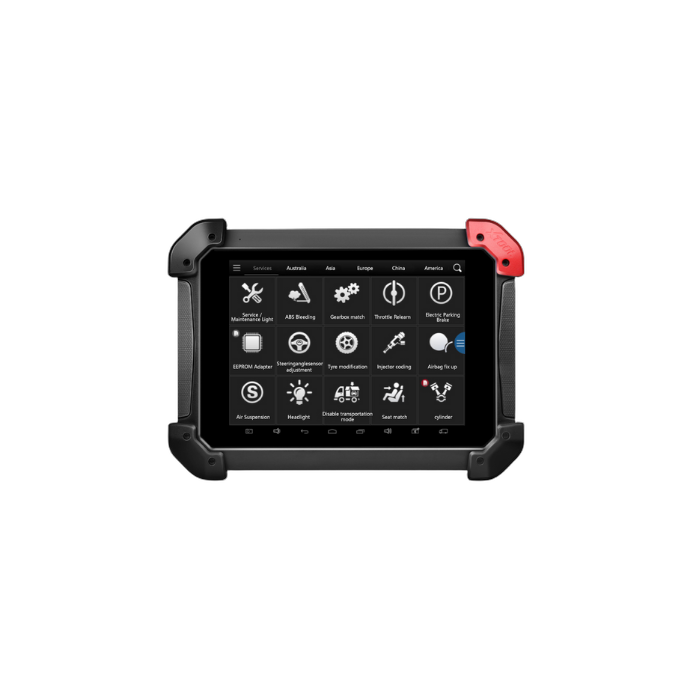
- Connectivity and hardware: WiFi, a Bluetooth VCI, and a fast processor speed up work, while a rugged tablet survives a busy workshop. A wireless VCI lets you drive the car and scan without a cable, which saves time on drivability faults.
What it costs and how to read the pricing
Pricing scales with coverage, functions, and software support rather than screen size. Treat the bands below as a buying guide for comparison rather than fixed quotes:
| Tier | Typical price range | Best suited to |
|---|---|---|
| Entry code reader / basic OBD2 | $100 - $550 | DIY, simple code read and clear |
| Enthusiast / light workshop scanner | $550 - $1,500 | Basic full-system, service resets |
| Professional bi-directional scanner | $1,500 - $3,500 | Independent workshops, most makes |
| OE-level / key programming platform | $3,500 - $5,000 | Advanced diagnostics, coding, immobiliser |
| Flagship workshop tablet | $5,000 - $8,400+ | High throughput, ADAS, topology mapping |
The diagnostic scan tool category on the marketplace shows a listed range of roughly $100 to $2,000 with an average around $1,050, but that average hides the professional end. Real workshop listings run well above it: bi-directional units around $3,950 to $4,800, and flagship tablets from about $6,500 to $8,400. The number buyers most often forget is software. Most professional tools bundle one to three years of updates, then charge an annual subscription to keep coverage current, so budget that as an ongoing cost rather than a one-off. A cheap tool with no path to updates ages fast as new models arrive. Weigh total cost of ownership across the tool and its updates rather than the price tag alone. You can compare current listings on the diagnostic scan tool page.
Will a tool actually fit your workshop?
This is where most disappointments start. One size does not fit all: a tool built for a broad independent workshop is overkill for a single-marque specialist and short of what a dealer needs. Profile your work against these questions before you shortlist:
- Vehicle mix: A broad independent shop needs wide OE-level coverage, while a marque specialist does better with a tool that goes deeper on one or two makes. Match the tool to what rolls in.
- Job type: If you do log book servicing, service resets and battery registration matter. If you do electrical fault-finding, bi-directional control and live data are essential.
- Mobile or fixed: A mobile mechanic wants a rugged wireless unit that covers common makes without a laptop, while a fixed bay can run a larger tethered platform.
- Growth and new tech: Hybrids, EVs, and driver assistance are a rising share of the fleet. Confirm the tool and its updates keep pace, or you will replace it sooner than planned.
A realistic scenario
Picture a three-bay independent workshop in outer Melbourne servicing a broad mix of Toyota, Ford, Hyundai, and a growing share of European cars and hybrids. Their ageing code reader handles engine faults but cannot touch ABS, airbags, or the newer models, so those jobs go elsewhere.
A professional bi-directional scanner around the $3,500 mark gives them full-system coverage across the makes they see, actuator tests to confirm a fix, and the service resets a modern log book demands. The owner checks the update subscription cost for years two and three and factors it into the decision, not just the purchase price. The tool keeps the European and hybrid work in-house, which quickly outweighs the outlay. Before committing, it is worth weighing whether to buy outright or finance the tool across its life: the hiring versus buying machinery guide works through the trade-off for Australian businesses. A scanner also pairs with other bay investments, so a workshop fitting out fully may compare a car wheel aligner and a brake testing system at the same time.
Frequently asked questions
What is the difference between a code reader and a professional scan tool?
A code reader retrieves and clears fault codes, usually from the engine only. A professional scan tool reads every module, streams live data, and adds bi-directional control, so it can command components, run active tests, and perform coding and service functions. That difference is what lets a tool actually diagnose and fix a modern car rather than just flag a light.
How much should a workshop diagnostic scan tool cost?
Professional bi-directional tools list from about $1,500 to $3,500, OE-level and key programming platforms $3,500 to $5,000, and flagship workshop tablets $5,000 to $8,400 or more. Entry code readers sit far lower at $100 to $550 but are not built for workshop use. The category average is around $1,050, weighted by basic units.
Are there ongoing software costs?
Usually yes. Most professional scanners include one to three years of software updates, then charge an annual subscription to keep vehicle coverage current. Factor that renewal into the total cost, because a lower purchase price with a high yearly fee can cost more across three years than a dearer tool with cheaper updates.
Will one scan tool cover every make and model?
Not always. Coverage varies by tool, and depth on a given make matters as much as the length of the list. Broad OE-level tools cover most mainstream makes, but some European models, hybrids, and key programming need higher-tier or marque-specific tools. Confirm the tool covers the vehicles you actually service before you buy.
What matters most
A diagnostic scan tool is a coverage decision before it is a price decision. The tools that pay for themselves are matched to the workshop: the right vehicle and system coverage, the bi-directional functions your jobs need, and the special resets your servicing demands. Get the fit and the update costs right first, then choose the tier that suits your cash position. Get the fit wrong and even a flagship tablet leaves work on the table, while the right mid-range tool keeps complex jobs in-house and pays for itself in cars you no longer turn away.
Ready to match coverage, functions, and update costs to your workshop and compare pricing? Get quotes from diagnostic scan tool suppliers across Australia here.
-160x160-state_article-rel-cat.png)
-160x160-state_article-rel-cat.png)