
Key takeaways
- New tray sealer prices (2026): Manual $5,000-$12,000; semi-automatic $15,000-$40,000; fully automatic inline $40,000-$120,000+; used units from $8,000.
- Tooling dies add $1,500-$5,000 per tray format: Most operations need 2-4 die sets at purchase, adding $3,000-$20,000 to first-year cost.
- Lidding film is the largest running cost: $0.02-$0.08 per tray for standard film; $0.04-$0.12 per tray for anti-fog or peelable MAP film - at 1,000 trays/day this runs $7,000-$30,000/year.
- 5-year TCO for a mid-range semi-automatic: $55,000-$95,000 all-in, including machine, tooling, film waste, maintenance and gas (if MAP-equipped).
- If labour saving exceeds $40,000/year: A semi-automatic sealer at $25,000-$35,000 pays for itself within 12 months - the break-even point for most single-shift food operations.
- Depreciation: ATO effective life 10-15 years; diminishing value rate 13.3-20%; instant asset write-off threshold applies to most semi-automatic configurations.
What tray sealing machines actually cost in Australia
Tray sealing machines are mid-range packaging capital equipment where the purchase price accounts for 35-50% of the 5-year cost. The full financial picture includes tooling dies, lidding film, MAP gas (if applicable), maintenance and the labour saving that justifies the investment. Most approval documents that get rejected at sign-off stage are missing the consumable layer - film cost alone can exceed the machine purchase price within 2-3 years at volume.
This guide breaks down every cost component for manual, semi-automatic and fully automatic tray sealers in the Australian market. For configuration selection, specifications and supplier evaluation, see the tray sealing machine buying guide on IndustrySearch.
Operations where tray sealer cost modelling is most relevant:
- Fresh protein processors costing MAP packaging vs traditional overwrap
- Ready-meal manufacturers building an approval case for inline automation
- Contract packers comparing per-tray cost across machine configurations
- Small-to-mid food producers evaluating manual vs semi-automatic ROI
Choose your price bracket
Before modelling costs, confirm which automation tier matches your throughput. Your choice here sets the purchase price floor and determines which running costs apply.
Configuration | Price Range (AUD) | Typical Use Case |
|---|---|---|
Manual bench-top (new) | $5,000-$12,000 | Under 100 trays/shift, deli, catering, R&D |
Semi-automatic (new) | $15,000-$40,000 | 100-500 trays/shift, 1-3 tray formats |
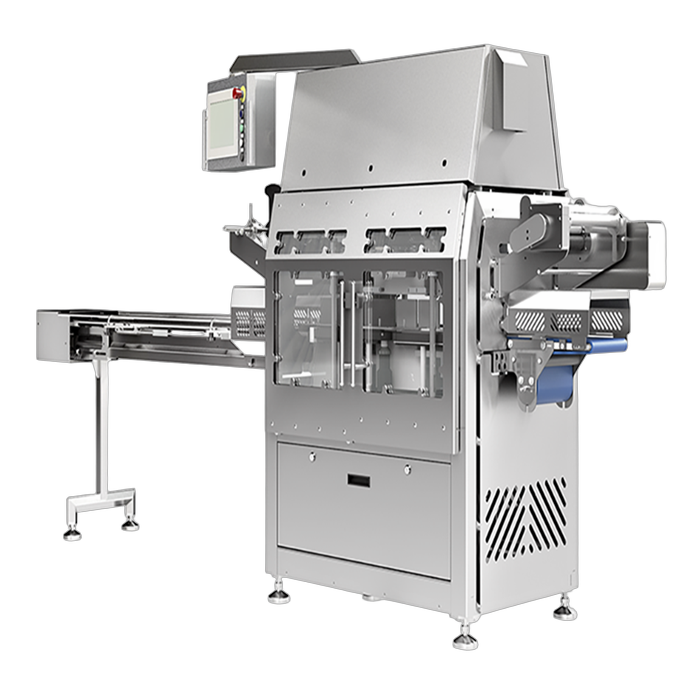
Fully automatic inline (new) | $40,000-$120,000+ | 500+ trays/shift, MAP, retail supply |
Used/refurbished | $8,000-$50,000 | Inspect seal plate and heating elements |
Tooling die (per tray format) | $1,500-$5,000 | Custom to each tray size and shape |
MAP gas flush add-on | $5,000-$15,000 | Factory-fitted or retrofit; requires gas infrastructure |
If your operation seals under 100 trays per shift, a manual bench-top at $5,000-$12,000 is the right entry point. If you seal 100-500 trays per shift, a semi-automatic at $15,000-$40,000 eliminates one manual position. Above 500 trays per shift, an inline automatic at $40,000-$120,000+ is the only configuration that sustains throughput without bottlenecking. Once your tier is confirmed, move to Step 2 to model the full running cost.
Map the full running cost
With your machine tier confirmed, these are the ongoing costs that determine total cost of ownership over the asset life.
Cost Category | Annual Cost (AUD) | Key Driver |
|---|---|---|
Lidding film | $5,000-$30,000 | Tray volume and film type (standard, anti-fog, peelable, MAP-grade) |
MAP gas (CO2/N2) | $2,000-$6,000 | Only if gas flush equipped; tray volume and gas mix ratio |
Scheduled maintenance | $2,000-$6,000 | Heating elements, seals, pneumatic components, annual service |
Compressed air | $500-$2,000 | Proportional to cycle rate; higher on MAP machines |
Electricity | $800-$2,500 | Heating element wattage and shift hours |
Die replacement/refurbishment | $500-$2,000 | Seal surface wear; frequency depends on tray volume and material |
The dominant insight: lidding film is 40-60% of total running cost across every configuration. Film specification and supplier negotiation have more impact on long-term cost than the machine purchase price. A mid-range semi-automatic sealer running 500 trays/day on standard film consumes $8,000-$15,000/year in film alone.
Build the 5-year TCO model (2026 prices)
Purchase price is the line item that gets approved - but total cost of ownership is the number your finance team needs. Here is the 5-year TCO for each tier at single-shift utilisation.
Cost Component | Manual | Semi-Auto | Fully Auto Inline |
|---|---|---|---|
Machine purchase | $8,000 | $30,000 | $80,000 |
Tooling (2 die sets) | $3,000 | $6,000 | $8,000 |
Film (5 years) | $15,000 | $50,000 | $100,000 |
Maintenance (5 years) | $5,000 | $15,000 | $25,000 |
Gas + utilities (5 years) | $3,000 | $10,000 | $30,000 |
5-year TCO | $34,000 | $111,000 | $243,000 |
A semi-automatic sealer replacing one manual packing operator saves $55,000-$70,000/year at current NSW and VIC packing wage rates. Against a 5-year TCO of $111,000, payback occurs in 18-24 months. Operations running two shifts halve that timeline. For a semi-automatic tray sealer at $15,000-$40,000, get quotes for automatic tray sealing machines to compare delivered pricing against these benchmarks.
Plan the asset - depreciation and financing
Tray sealing machines are classified as food packaging plant for ATO depreciation. The effective life is 10-15 years, giving a diminishing value rate of 13.3-20% per year or 6.7-10% under prime cost. A $30,000 semi-automatic sealer depreciates at $6,000 in year one under diminishing value at 10 years.
The instant asset write-off threshold of $20,000 covers manual and some entry semi-automatic models in a single deduction year. For fully automatic machines above this threshold, equipment finance at $1,200-$3,500/month spreads cost while preserving working capital. Hire-to-own arrangements suit operations with seasonal or unproven tray volumes, with typical terms of 24-60 months.
Evaluate suppliers on cost
For the full supplier evaluation checklist covering specifications, service and compliance, see the buying guide. When comparing supplier quotes on price, focus on these cost-specific factors:
Factor | What to Ask |
|---|---|
Included vs extra die sets | How many die sets are included in the quoted price? What does each additional set cost? |
Film sourcing | Am I locked to proprietary film, or can I source from any supplier? |
Installation and commissioning | Is delivery, installation and commissioning included in the quoted price? |
Spare parts pricing | What are the replacement costs for heating elements, seal plates and pneumatic cylinders? |
Service contract | What does an annual service contract cost? Is preventative maintenance included? |
Gas system cost | If MAP-equipped, what is the total gas infrastructure cost including regulators and piping? |
Warranty scope | What components are covered and for how long? Are consumable parts excluded? |
Finance options | Do you offer lease, hire-to-own or chattel mortgage arrangements? |
Frequently asked questions
What is the total cost of ownership for a semi-automatic tray sealer over 5 years?
A mid-range semi-automatic at $25,000-$35,000 running 300-500 trays/day has a 5-year TCO of $90,000-$120,000, with lidding film accounting for 40-50% of total spend. Multi-shift operations should multiply film and maintenance estimates accordingly.
What is the payback period for upgrading from manual to semi-automatic sealing?
At current packing wage rates of $55,000-$70,000/year in NSW and VIC, a $25,000-$35,000 semi-automatic sealer replacing one operator reaches payback in 6-12 months on a single shift. Two-shift operations reach payback in 3-6 months.
How much does lidding film cost per tray?
Standard heat-seal film runs $0.02-$0.06 per tray; anti-fog film for fresh produce costs $0.04-$0.08; peelable MAP-grade film reaches $0.06-$0.12. Film cost per tray drops 15-25% at higher order volumes from Australian film distributors.
Can i depreciate a tray sealer under the instant asset write-off?
Manual and entry semi-automatic models under the $20,000 threshold qualify for full deduction in the year of purchase for eligible businesses. Machines above this threshold are depreciated over the 10-15 year ATO effective life.
Is it cheaper to buy used or lease a new tray sealer?
Used semi-automatic sealers at $8,000-$20,000 offer 40-60% savings over new, but inspect seal plate condition and heating element hours before purchase. Leasing a new machine at $800-$2,500/month suits operations with unproven volumes or seasonal demand.
What matters most
- Lidding film is 40-60% of 5-year running cost - film supplier negotiation matters more than machine price negotiation
- 5-year TCO: manual $34,000; semi-automatic $111,000; fully automatic inline $243,000 at single-shift utilisation
- Payback vs manual packing: 6-12 months for semi-automatic at current NSW/VIC wage rates
- Tooling dies at $1,500-$5,000 per format are a first-year cost that most approval documents underestimate
- ATO effective life 10-15 years with instant asset write-off available for sub-$20,000 configurations
If you are within 6 months of purchasing, get quotes for automatic tray sealing machines to benchmark supplier pricing against these cost models.
Don't waste time contacting suppliers individually. IndustrySearch gives you direct access to verified Australian automatic tray sealing machine suppliers - where industrial buyers request and compare multiple quotes so they can buy with confidence.
- Get quotes for automatic tray sealing machines - contact multiple verified suppliers with a single enquiry
- Compare models - filter by capacity, configuration and region
- Contact suppliers directly - speak to specialists who service your state
Get and compare automatic tray sealing machine quotes now
-160x160-state_article-rel-cat.png)